
DeFi Debrief
Week of January 19, 2026: Senate Ag Market Structure Text; FTC Comment Letter; BRCA Myth v. Fact Resource
Senate Ag Releases New Draft of Market Structure Legislation
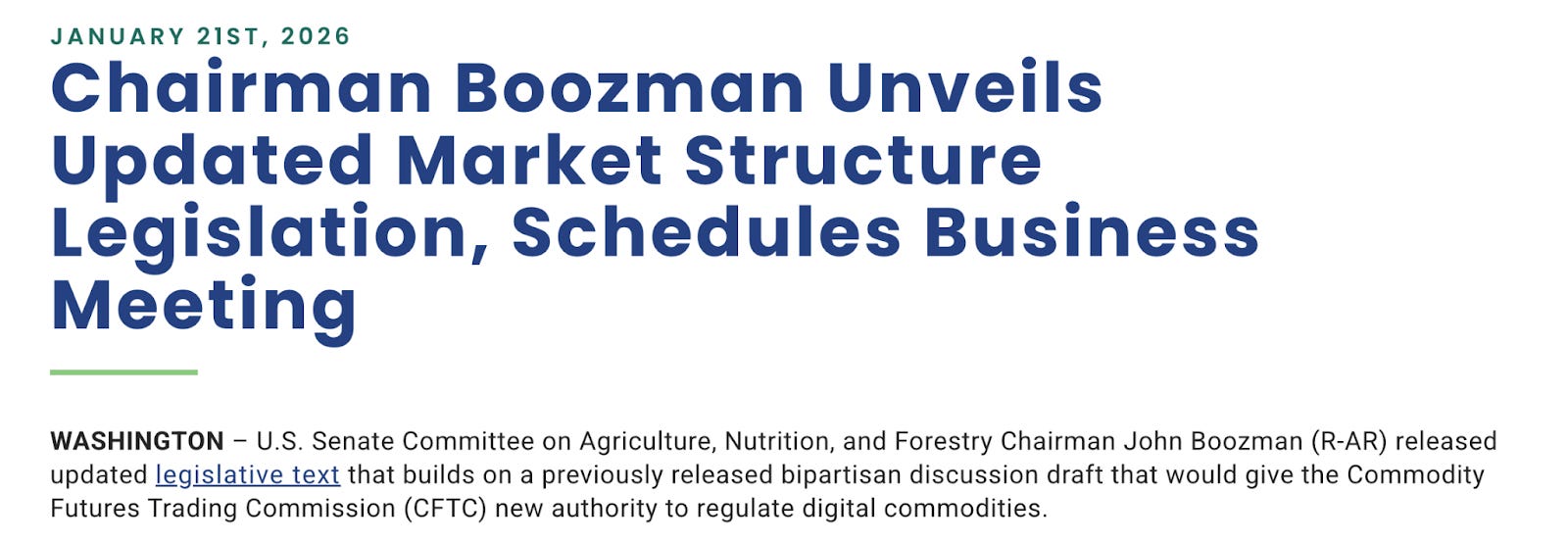
On January 21, 2026, the Senate Agriculture Committee released new digital asset market structure legislative text, entitled the “Digital Commodity Intermediaries Act,” that builds on a previous bipartisan discussion draft that would give the Commodity Futures Trading Commission (CFTC) authority to regulate digital commodities in the United States.
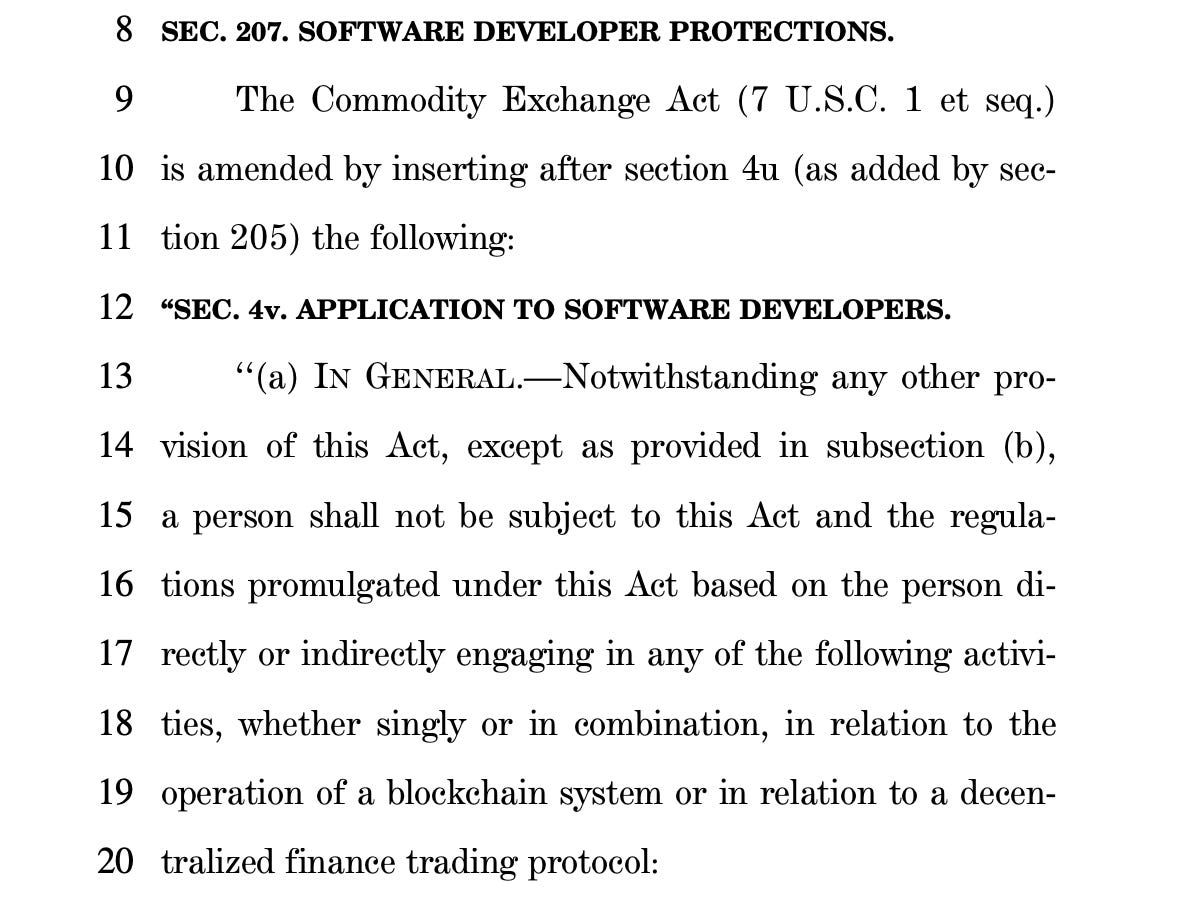
The DEF team is thankful to the Senate Agriculture Committee and its staff for including robust developer protections in Section 207. These provisions protect noncustodial software developers and infrastructure providers from improper regulatory treatment under the Commodity Exchange Act. We look forward to continued constructive conversations.
The Senate Agriculture Committee is expected to hold a markup and vote on the market structure bill draft on Tuesday, January 27. The Agriculture Committee’s text would then need to be reconciled with the legislative text under consideration by the Senate Banking Committee before proceeding to a vote by the full Senate. The Senate Banking committee is reportedly delaying the markup of its portion of the bill to accommodate other legislative priorities.
DEF will continue to closely monitor developments in market structure legislation and advocate for the protection of the rights of DeFi developers, DeFi users, and DeFi technology.
DEF & Partners File FTC Comment Letter
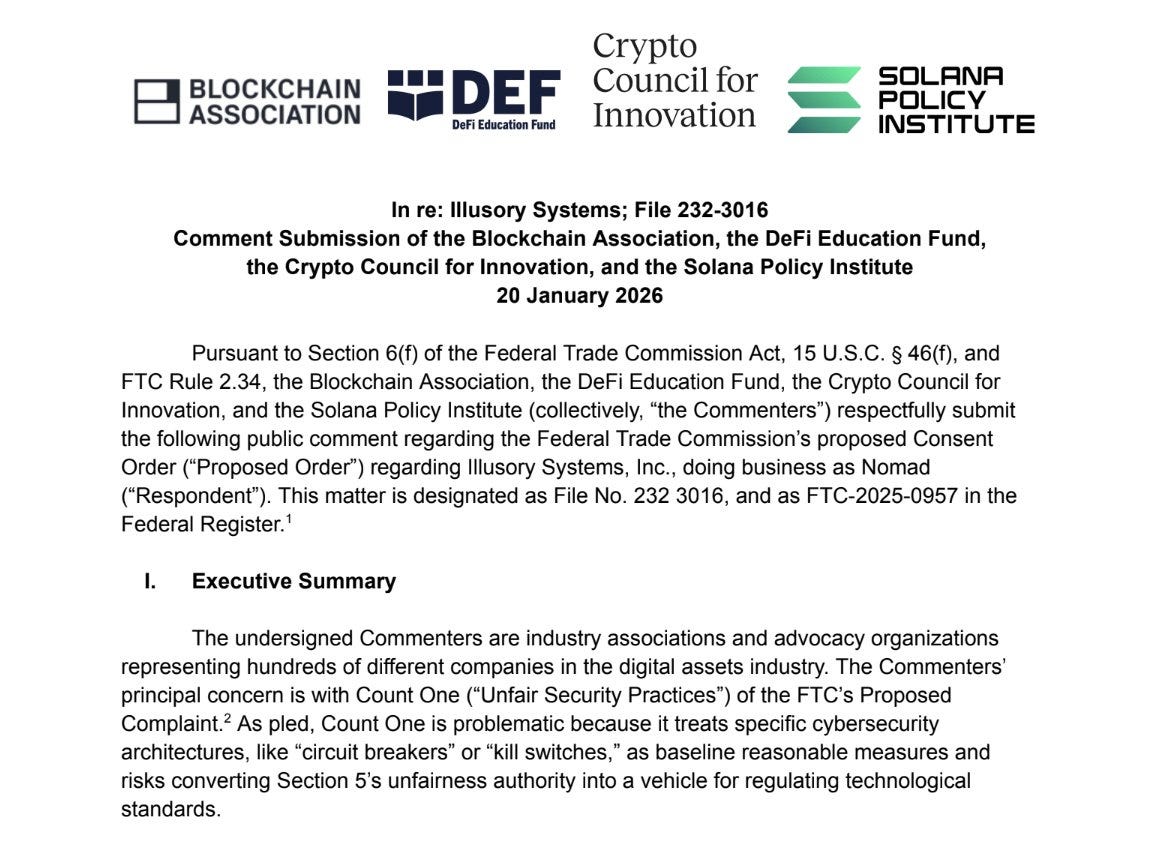
On January 21, 2026, DEF, together with Blockchain Association, Crypto Council for Innovation, and Solana Policy Institute, submitted a joint comment letter to the Federal Trade Commission (FTC) on its proposed complaint and consent order with Illusory Systems, a Utah-based blockchain infrastructure company that operates the Nomad Token Bridge.
The letter urges the FTC to reconsider any approach that would use its enforcement authority to set substantive engineering standards for decentralized systems because such an approach has real consequences for security, innovation, and how these systems are built. Decentralized and non-custodial technologies operate differently from traditional financial intermediaries; mandating centralized design features like “kill switches” or “circuit breakers” can undermine the security, resilience, and core purpose of decentralized blockchain technology and is not a workable approach.
You can read the full letter here.
DEF Publishes BRCA Myth vs. Fact Resource
On January 21, 2025, DEF published a new blog and downloadable resource: “Myths vs. Facts: the Blockchain Regulatory Certainty Act (BRCA).” In this blog, DEF provides background on the BRCA, explains why it is good policy for the United States, and debunks common misconceptions about the legislation. You can download the PDF here.
Read the full blog here. DEF also published an X thread unpacking each myth vs. fact here.
DEF January Community Call
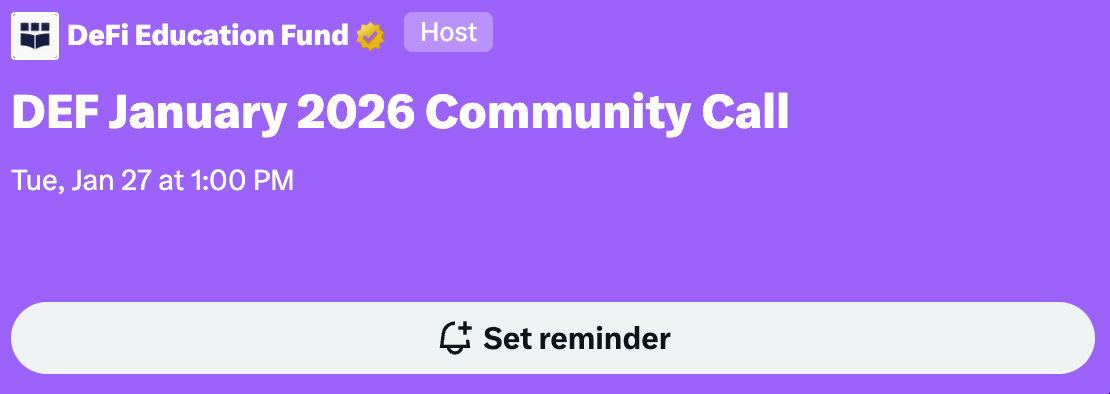
DC crypto policy happenings are developing quickly.
Join the DEF team on Tuesday, January 27 at 1pm EST [via X Spaces] for our first Community Call of 2026 as we unpack the latest developments and what they mean for DeFi. Hope to see you there.
DeFi Dictionary
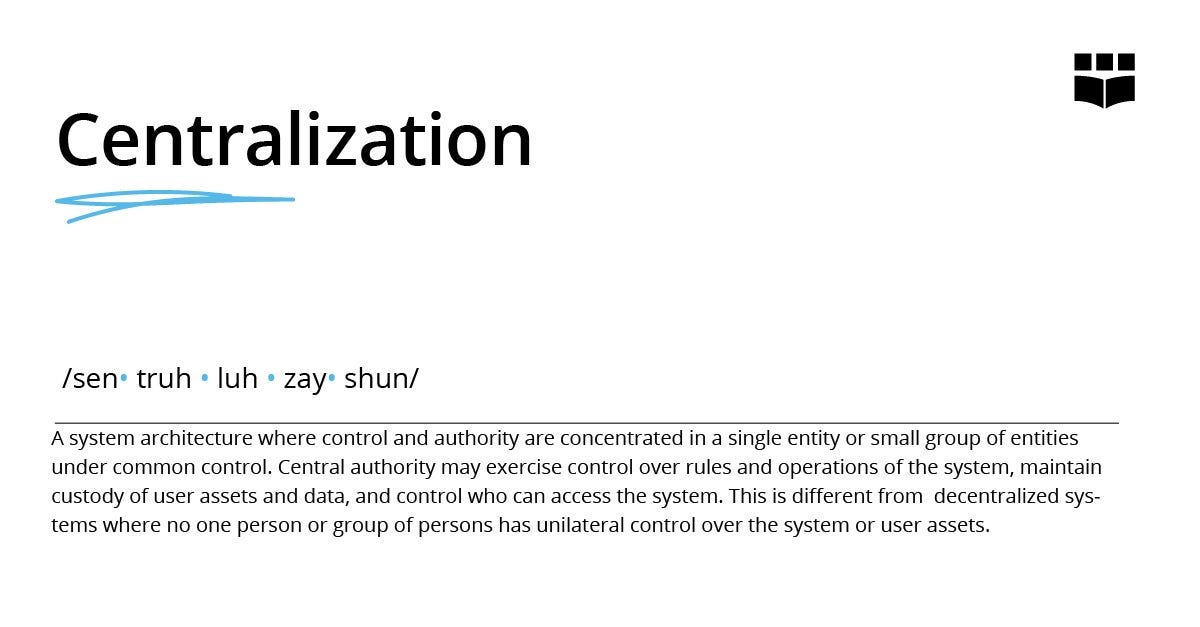
Centralized systems rely on intermediaries and points of control. Decentralized systems do not. Treating them the same in policy misses the point and risks bad outcomes for innovation. Our Word of the Week: Centralization.
Notable and Quotable
“Blockchain developers who have simply written code and maintain open-source infrastructure have lived under threat of being classified as money transmitters for far too long [...] This designation makes no sense when they never touch, control, or have access to user funds, and unnecessarily limits innovation. This bill gives our developers the clarity they need to build the future of digital finance without fear of prosecution for activities that pose no money laundering risk. It’s time to stop treating software developers like banks simply because they write code.”
——Senator Cynthia Lummis (R-WY), Senate Banking Digital Assets Subcommittee Chair, Statement for Introducing Bipartisan BRCA of 2026